Sewage has backed up into my basement. What do I do right now?
Stop running water in the house now. That means toilets, sinks, showers, the washing machine and the dishwasher. Every gallon you send down the line has nowhere to go but out through the lowest opening, which is your basement floor drain.
Stay out of the water. Keep children and pets away. If you must go in, wear boots and gloves, and do not touch outlets or appliances while standing in it. Do not pour chemical cleaners down any drain.
One safe check: look at whether other drains upstairs are gurgling or slow. If they are, the main sewer lateral is blocked or failing. Typical causes are root intrusion at a clay joint, grease build-up on the pipe wall, a bellied line holding water, or a collapsed section. A single slow fixture is a branch line problem. A basement backing up with the whole house affected is a main line problem, and it needs different equipment.
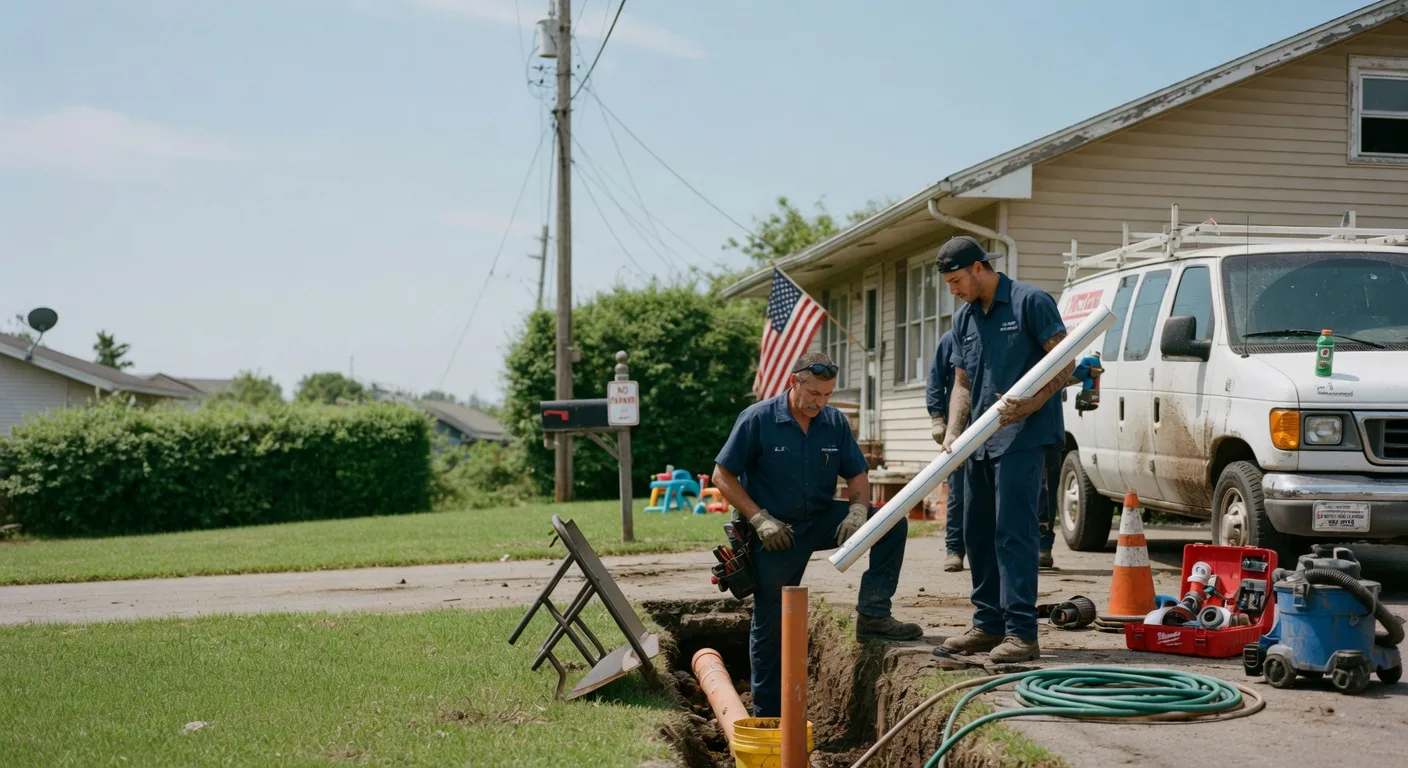
This is Emergency Drain Cleaning, and it is not a homeowner job. A cable machine at the cleanout can clear a soft blockage. Roots and grease usually need hydro jetting, and a camera inspection shows why the line stopped.
Cost depends on cleanout access, what is found in the pipe, how much has to be removed or repaired, and any permit requirement. Expert Plumbers Co is a referral service. Call (380) 262-9173 and we will refer you to a plumber serving Galt, CA.
Once the water is stopped, take photos of the water line and the affected items before anything is moved, and write down the time you first noticed it. If the backup is sewage, do not use a wet vacuum or a household fan on it, and do not start throwing out porous items until the plumber has opened the line. Tell the plumber what ran just before the backup, such as a load of laundry or a long shower, and whether the floor drain or a basement toilet was the first place it showed. In an older home with a clay or cast iron lateral, the cause is often roots or a collapsed section. In a newer home it is more often a belly, a joint that was set poorly, or a heavy wipe or grease blockage. After the line is cleared, the floor and walls still need proper cleaning and drying, and that is separate from the plumbing repair.
Water or sewage is seeping out around the cleanout cap in my yard. What does that mean?
If liquid is seeping up around the cleanout cap, the sewer line is full to ground level at that point. The cleanout is a capped pipe that gives a plumber direct access to the main line, and it is often the lowest open point on the system. When a blockage sits downstream, waste water rises until it finds the weakest spot, and that is frequently the cap.
Less often the cap itself is the problem: a cracked cap or worn threads can weep a little after heavy use. The difference is the smell and the timing. A damp ring with no odor that dries out is one thing. Grey or dark water with a sewage smell that returns every time the house uses water points to a blocked or partly collapsed line.
Look at the rest of the house. If one fixture is slow, the trouble may be local. If several drains are slow, toilets gurgle, or a floor drain or shower fills when the washer runs, the main line is the likely culprit.
Safe checks you can do:
Keep children and pets away from the wet area. Hold off on laundry, dishwasher cycles and long showers. Do not unscrew the cap. A line under pressure can spray sewage when the cap comes off, and that is a health risk.
Stop running water and call now if sewage is reaching the yard in a steady flow, if it is entering the house, or if the seep keeps growing while you are using as little water as possible.
On the repair side, a cable machine is often enough for a soft blockage such as paper or grease. Roots, heavy grease build-up or scale usually call for hydro jetting or a cutting head. A camera inspection afterwards shows whether the pipe is cracked, bellied or offset at a joint, which decides whether cleaning will hold or whether a repair is needed. Cost depends on how easy the cleanout is to reach, how far the blockage sits from it, how much needs to be dug or removed if a repair follows, and permit requirements under local code.
If the line has to be opened for repair, the local building department may need to be involved. To be connected with an independent local plumber in Galt, CA, call Expert Plumbers Co on (380) 262-9173.
The furnace or air conditioner drains into my basement floor drain and now it overflows. Is that a drain cleaning job?
"The furnace drains into my basement floor drain and now it overflows." That is a common one, and it is a drain problem with two parts. The overflow can come from either end: the small condensate line, or the floor drain it empties into.
Condensate lines clog with algae and sludge. Once it blocks, water backs up at the unit or spills from the line onto the floor. Many systems also have a trap on that line, and the trap is the first place sludge collects.
The floor drain itself can be the problem. If it is slow or backs up when you run the washer or a tub upstairs, the cause is in the house drain: grease build-up, a bellied line holding water, or root intrusion at a clay joint further out.
One slow floor drain, with the rest of the house draining fine, usually means a local blockage in that branch. Every drain in the house backing up, or the lowest drain gurgling and rising while others run, points to the main line or a failed sewer lateral.
Safe homeowner check: Look at the pipe from the unit. Is water standing in the pan or trap? Pour a bucket of water into the floor drain and watch how fast it goes. Do not pour bleach or drain chemicals into the condensate line without knowing the unit's instructions.
Stop running water and call now if the floor drain is bringing up sewage or a sewer smell, other drains in the house are slow or gurgling, water is spreading toward electrical equipment or the furnace, or the overflow comes back soon after you clear it.
A cable machine is often enough for a plain clog in the floor drain branch. A condensate line is a different job: it needs flushing or clearing at the line and trap, and may need a cleanout fitting added. If the floor drain keeps backing up, a camera inspection shows whether the main line has roots or a belly. Hydro jetting is used when grease or scale coats the pipe wall.
Expert Plumbers Co is a referral service. We connect you with an independent local plumber in Galt, CA. Call (380) 262-9173.
Ask the plumber to check both the condensate line and the floor drain, and to explain which one failed. Ask whether the condensate should drain somewhere else, since rules vary by area on where it may discharge. Cost depends on access, the parts needed, how much has to be opened up or removed, and any permit or code requirement.
The outdoor drain by my driveway, patio or basement stairwell floods in heavy rain. Who clears that?
"The drain by my driveway floods every time it rains hard." Outdoor drains at driveways, patios and basement stairwells fail in heavy rain because they are built to move a lot of water quickly, and leaves, silt and gravel stop that. The grate clogs, then the pipe below fills.
The first thing to know is where it goes. Many exterior area drains tie into a storm line or a dry well, not the sanitary sewer. Some connect to the house drain, and rules vary by area on whether that is allowed. Where the pipe ends decides who can service it, what tools make sense and whether a permit is involved.
Common causes are packed leaves and silt in the drain body, a pipe crushed or shifted by a root or vehicle, tree roots entering a joint, a pipe with too little fall so it holds water, and a storm line that is full or backed up downstream. In a stairwell, the pipe often runs to a lower point and can clog with mud.
If one outdoor drain floods and the rest of the house drains normally, the blockage is in that outdoor branch. If basement floor drains and toilets back up in the same storm, the drain may be tied to the house drain or the main line is overloaded. Check which, because that changes the repair.
Safe homeowner check: Take the grate off and clear leaves and debris by hand with gloves. Look into the drain with a light. Pour a bucket of water in and watch if it drains or stands. Note whether the problem happens only in heavy rain. Do not stand in standing water near electric outlets, and do not poke the pipe with a rod that could crack it.
Stop running water and call now if water is entering the house through a door or foundation, a basement drain is rising, sewage smell comes with the flooding, or the water backs up into indoor fixtures.
A cable machine can clear soft debris and some roots. Hydro jetting is better for packed silt and fine roots in a longer run. A camera inspection helps when the drain keeps flooding, because it shows a collapsed section, a belly holding water, or where the line actually discharges.
Expert Plumbers Co is a referral service. We connect you with an independent local plumber in Galt, CA. Call (380) 262-9173.
Ask the plumber where the drain discharges and whether it can be reached with a cleanout. Ask whether a repair or regrading is needed, not just clearing. Cost depends on access, the parts or materials needed, how much of the paving or soil has to be opened up or removed, and any permit or code requirement.
We live in a manufactured home. Why do the drains under the floor keep clogging?
You live in a manufactured home, and the drains keep clogging. A sink runs slow, the tub gurgles, or the toilet backs up every few months. The cause is usually under the floor, where you cannot see it.
Drain lines in a manufactured home run through the belly wrap, between the floor framing and the ground. The runs are long and shallow, with very little fall, so water and solids move slowly and grease, soap and paper settle. Over time the hangers that hold the pipe can fail and the line sags. A sagging section becomes a bellied line that holds water and collects debris. Lightweight plastic pipe can also crack or pull apart at joints when the ground shifts.
Cold weather adds a problem. Pipes under the floor can freeze, and a frozen drain looks like a clog until it thaws. Roots can also reach the outside section where the home ties into the sewer.
One slow fixture is usually a branch or trap problem near that fixture. If sinks, tub, toilet and washer all slow down together, or water comes up in the lowest fixture, the main run under the home or the sewer connection is the likely spot.
Safe homeowner check: Run each fixture one at a time and note which are slow. Look for a cleanout outside near the home and see whether it holds water, without opening it under pressure. Do not crawl under the home if it is wet or smells of sewage.
Stop running water and call now if sewage is coming up inside, if water drips from the belly wrap, if the floor feels soft, or if the smell of sewage is strong under or around the home.
A cable machine is often enough for a soft clog in one branch. Hydro jetting is the better tool for build-up on the wall of a long, shallow run. A camera inspection is the right step when clogs keep returning, because it can show a sag, a cracked joint or a separated pipe.
Expert Plumbers Co is a referral service. We connect you with an independent local plumber in Galt, CA. Call (380) 262-9173.
Ask the plumber how they will reach the pipe and whether the belly wrap has to be opened and resealed. The scope depends on access under the home, how much belly board or insulation comes off, the pipe material, whether hangers need replacing to restore the slope, and any permit or code requirement.